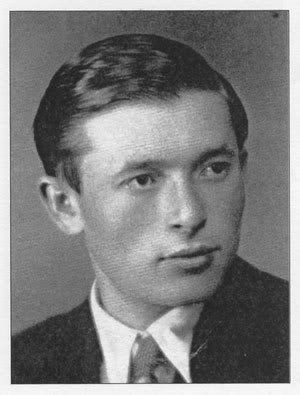
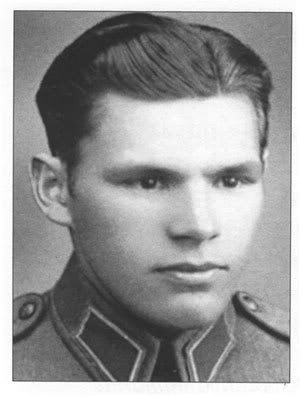
Showing posts with label Finland. Show all posts

Monday, 4 February 2013

Victorious Mongolian Ice Sculptor

In the previous post we wrote about the Mongolian ice sculptors competing at Korkeasaari Zoo in the Helsinki archipelago. The winner of the individual competition was announced today, and he is also Mongolian! Lkhagvadorj Dorjsuren won the first prize with his intricately carved work "The Lunch", depicting the competition's maritime and environmentally conscious theme through the shape of a seagull eating garbage - a prosaic subject rendered alarmingly beautiful and calling our attention to the effects of pollution. The jury especially praised the shapes of the waves at the base of the sculpture. The competition will continue next weekend, 9.-10.2.2013.


More photos and video clips: Korkeasaari Zoo media gallery

Sunday, 3 February 2013

Mongolian Ice Sculptors in Finland


The Korkeasaari Zoo in Helsinki, located on an island within the city archipelago, currently celebrates an international ice sculpting festival, Art Meets Ice 2013. Many of the participants are from Mongolia. Above, Bazarsad Bayarsaikhan and Dorjnamil Baatar work on their individual projects in the "Life on the Baltic Sea" competition, and they will also compete against each other and the other participants in teams of two in the tandem competition "My Sea". There's a promotional video on the Korkeasaari Zoo's website.

It will be exciting to see what maritime subjects the Mongolian artists will tackle. As a serendipitous coincidence, a Przewalski's horse at the zoo has foaled during their visit. Przewalski's horse (or Dzungarian horse) is an endangered subspecies of wild horse from the Central Asian steppes. Once it was extinct in Mongolia, but it has been reintroduced into nature reserves in the country. It is considered the last truly wild horse, others (like the Mustangs of North America) being feral varieties of the domesticated horse.

Perhaps the birth of the foal, so laden with symbolism, will inspire the artists even more in this competition? According to the Finnish national broadcasting service YLE, the artists were delighted by the news, and believe that it's a filly, although the zoo has not published any details yet... (video of the furry little foal here) (news in Finnish)

Photo source: Korkeasaari Zoo media gallery

Saturday, 11 July 2009

Amadeus, King of Tango

Once in a blue moon, reading Finnish tabloids can make you shout for joy, and today was such a memorable occasion. Ilta-Sanomat reported that Amadeus Lundberg, 20, had been elected tango king of the 2009 Tango Festival in Seinäjoki by a narrow jury vote and an overwhelming call-in vote from the general audience in the semi-finals. Lundberg's repertoire included the titles Romanesca, Rakkaus ei oo pysyvää (Love Isn't Permanent) and Onnemme kyyneleet (Our Tears Of Bliss). (More about the cultural significance of the tango in Finland.) Lundberg has promised to be kind and humble during his reign.


(Photo: yle.fi)


The tango festival in Seinäjoki is a very Finnish institution, albeit a rather recent one (the idea was conceived in a sauna in 1984). This year, a change was introduced: instead of a king and a queen, only one single person could win the crown. This ensures that the best, and only the best, will win, regardless of gender. Perhaps the judges were wary of Lundberg due to his young age. He shows a lot of promise and who knows how far he can go if success does not quench the flame. One of the tango king's privileges is a guaranteed place among the 12 national Eurovision finalists. I almost hope that Lundberg will decline this "honour", although he could beat Alexander Rybak in a cuteness competition ...


(Photo: Helsingin Sanomat)

Amadeus Lundberg comes from a musical family. From a young age, he was taught to play the violin and to sing professionally. His father, Taisto Lundberg, is a founding member of Hortto Kaalo, the first commercially successful Romani band in Finland. We nostalgically remember their hits from the folk wave of the 1970's, such as the international Gypsy classic Tsaiori, the socially conscious Miksi ovet ei aukene meille (Why Won't The Doors Open To Us) and the comical Ei raha tekis pahaa (Some Money Wouldn't Hurt). Amadeus has toured the last 3 years as Hortto Kaalo's lead singer.


Taisto and Amadeus Lundberg (Photo: Turun Sanomat).

More Finnish Romani tango singers


According to blogger "Life after Helsinki 2007", Lundberg won the televote in the semi-finals "to visible dislike of the jurors". Yet, he went on to win their hearts and minds in the finals. To quote Unelma-tango (The Dream Tango, 1932) by Arvo Koskimaa and Erkki Ranta:

… tummien silmien taa
viittoopi kultainen maa.


… beyond dark eyes
a golden land beckons.

Sunday, 15 February 2009

Teuvo Mustalaishurmaaja

This is a tinted version of a photo found in an article by Anu Koivunen on the concepts of stardom and women as consumers of film and filmstars in the 1920's, which features our favourite Finnish Tatar in a major role.

Under the name Teuvo Tulio, Theodor Tugai became an influential film director who put a passionate stamp on the Finnish film industry in the 1930's and 1940's. His early career as "the Finnish Valentino" is less well known. In Mustalaishurmaaja ("Gypsy Casanova", 1929), the 16-year-old Tugai plays Gypsy leader Manjardo. Koivunen describes how the camera focuses on him as on a beautiful object, with closeups of his half-shut eyes. His makeup and costume are chosen to accentuate this - dark skin, enhanced lips, jewellery, accentuated waist, occasionally shirtless... You get the picture.

But to be a desirable object for women - paradoxically put his masculinity into question. Watching and looking is an act of power, to be looked at is to become passive, traditionally feminine. But Manjardo does both. In the movie plot, he is a fiery character who is forced to accept an arranged marriage. He is an ethnic other who is both attracive and repellent (although his love interests in the movie are all "Gypsies", too - Koivunen hints that it would have been less acceptable to show "Finnish" women openly desiring a man). Two women, Glafira and Akris, fight for his attention, but the film finds a more conventional solution - Manjardo ends up with the motherly and caring Esmeralda, who tends to his wounds.

Next time, I will write more about the reception of Tugai's film persona among film critics, and the decline of the "Valentino" type.

Source:
Anu Koivunen: "Näkyvä nainen ja 'suloinen pyörrytys'", Vampyyrinainen ja Kenkkuniemen sauna - Suomalainen kaksikymmenluku ja modernin mahdollisuus ["Vampire Woman and the Sauna of Kenkkuniemi - The Finnish 1920's and the Possibility of Modernity"] Ed. Tapio Onnela, SKS, Helsinki 1992


Cross-posted at The Goldenbird Sings

Monday, 17 November 2008

Found in Finland

The Finnish board of museums (Museovirasto) has an interesting internet exhibition of "A Thousand Unknown People" (Tuhat Tuntematonta) on old photographs. Among these photographs of ordinary and not-so-ordinary Finns through the ages (and their pets) are a few chirayliqs, too.

Tadao Watanabe is one of the "unknowns" who has been identified by attentive visitors. He was a Lutheran missionary who married a Finn, Siiri Pitkänen. I have written about them earlier.

This couple has not been identified, but we know that they are Tatars. The photo was dedicated to "Mrs Aishä Ishakova from Höseyin Abudarov" in March 21, 1913.
So, what did the Finns look like 100-80 years ago? Any blond and blue-eyed chirayliq candidates?


This gentleman looks strikingly similar to the Tatar man above.


I always find that Finns look Scandinavian, but a special kind of Scandinavian, if you know what I mean.


This guy looks like Andy from my comic Goldenbird. After a bourgeois makeover, to be sure.


Finns and Russians just happen to be neighbours, they have nothing else in common... Just coincidence upon coincidence... Let's not jump to conclusions...

Soldier boys trying to look tough. Same as everywhere...

But I think these guys, who were working for the national railways, are my favourites.

Friday, 19 September 2008

Finnish Romani tango musicians

It all started when mum sent me a YouTube link to the song Kuumat tuulet ("Hot winds") from the Aki Kaurismäki film Kauas pilvet karkaavat (Drifting Clouds), performed by Markus Allan, and swooned about how cute he was when he was young. I found a photo of the young Markus Allan on the record cover on the right - a compilation of Finnish tango music. Markus is, of course, in the middle. (You can buy the record here.)

Maybe it is appropriate to take a moment to explain something about Finnish tango. People unfamiliar with the eastern tango traditions might only think of tango as fiery and temperamental, but in Finland, tango is slow, dark and melancholic. (Russian tango is kind of like that, too.) There is a strong tradition of going out to dance, mostly to tango and various other types of schlager music, so there is a lot of demand for this type of music.

Some Finnish tango musicians are cute guys of Romani descent.

Dimitri (Sjöberg) was born 1980 in Vammala.
At the age of 14 he participated in the preliminaries of Tangomarkkinat ("the tango market", the big tango festival in Seinäjoki). However, he was still too young, and had to wait another two years: at 16, he got to the semifinals and was made "Prince of Tango" in 1997. In the following year he won the same title again.

After his victories in Seinäjoki Dimitri dropped his last name and called himself only Dimitri.

Dimitri has no formal musical education, but he not only sings, but plays guitar and piano as well.

Here is his profile (in Finnish) at the venue Halssin lava in Nilsiä ...


Saska Helmikallio is another young and charming singer. He was born in Helsinki, also in the year 1980.
In 2005 he was crowned "King of Tango" at Seinäjoki (the second Rom to have won the title after Sebastian Ahlgren in 1997).

Next year Saska Helmikallio will be acting at the Imatra theater as the main character of the play Rakkauden rikkaus ("the riches of love"), which tells the story of the legandary tango singer Taisto Tammi, who died at a young age.

Here is Saska Helmikallio's official website, with some photos. Unfortunately they are quite small. Auraviihde, on the other hand, has a few high-resolution photos of him for press use, and a short audio clip.
Here is a slightly disturbing Titanic-themed fan made music video with his song Niinkuin tähdet ("like stars") ...

Finally, Benja (Jean-Benjamin Rooth) became known as a child star when he made his first solo album at 11 years. He studied music at the conservatory, and later on piano, composing and arrangement with a private teacher. In 1995, when he was 16, Benja won the competition Syksyn sävel ("autumn song") together with the duo Pelimannet (whose name is a pun on "pelimanni", musician, and "manne", a common, perhaps slightly derogatory, term for Roma among Finns). They toured together and recorded an album. Benja continues to make music and works in various studio projects.


Saturday, 9 August 2008

In The News

I feel like a sad person for posting here two hours after midnight, but Russian military has launched an offensive into separatist South Ossetia after Georgian troops invaded the region.

The allegiance of South Ossetia is disputed. Officially, it belongs to Georgia. There is a strong separatist tendency and the region split de facto from Georgia after a civil war 1990-1992. Most of the inhabitants are Russian citizens. Russia supports South Ossetia financially and has maintained a military force there, as a part of a mixed "peace corps". NATO supports Georgia and its territorial claims. International law does not sanction the two referendums in South Ossetia that supported separation in 1992 and 2006. Georgia accuses Russia of trying to annex both South Ossetia and Abkhazia. Russian leaders who demanded self-determination for South Ossetia had a different standard for Chechnya. The USA has been treating Georgia as a loyal ally - there are Georgian troops in Iraq and Afghanistan, and American military advisors in Tbilisi. The UN security council cannot agree on a consistent policy.

Da haben wir den Salat.

Neither Russian nor Georgian top politicians have been any poster children for democracy lately. Saakashvili has been cracking down on political opposition. Putin shows class by demanding revenge for dead soldiers rather than namby-pamby justice. The American presidential candidates are trying to trump each other in their reactions against Russian aggression and ask Russia to respect Georgian territory (when history jokes, she is not exactly subtle isn't she?).

What is really horrible is the plight of the ordinary people.

Some headlines translated from Der Spiegel, my main German news source after Titanic Magazin (which is currently focused on lampooning the Olympics, China and the West):

Photos: Thousands are fleeing the battles in South Ossetia
Analysis: Conflict of South Ossetia - Proxy War About Power and Resources
Portrait: President Saakashvili - Superman in Crisis
Europe Caught By Caucasian War On The Hop: Nobody listens to the EU as usual - not that the EU leaders have anything more sensible to say. Even NATO seems to have been startled by the sudden outbreak of violence.

And a headline from Helsingin Sanomat, Finland's largest newspaper:
Saakashvili: "We are like the Finns in the Winter War" (the real treat of the article is the flaming comments section, where readers debate if this is a valid comparison, political propaganda or an insult against Finland's national honour)

Wednesday, 6 August 2008

"Komeat keskiaasialaiset miehet (heteroille)"?

Chirayliqin henkeen kuuluu rajankäynti idän ja lännen välillä. Monet artikkeleistamme käsittelevät mielikuvia idästä ja lännestä, ja miten keskiaasialaiset, vaikka nimensä mukaan elävät Aasian keskellä, usein olemuksellaan tai elämänteoillaan kyseenalaistavat kuvitteellista rajaa. Siksi Chirayliq on myös avoin keskiaasialaisten naapureille.

Suomalaiset miehet pääsevät joskus kunnia-chirayliqeiksi jos heidän ulkonäkönsä sopii aiheeseen ja/tai he pelaavat jääkiekkoa. Meillä käy myös suomalaisia vierailijoita. Keskustelunaiheena Fighter Magazinen (julkaisu Tinetin mieleen?...) foorumilla esiintyy artikkelimme Suomen tataareista. Etenkin nuoren Teuvo Tulion (synt. Theodor Tugai) muotokuva karvareuhkassa saa ansaittua huomiota.


Tervetuloa vain! On hauska nähdä että vaarikin (siis Abbas alias Esko, ei Theodor alias Teuvo... voi assimilaation painetta!) saa vanhoilla päivillään foorumiphamea.
Muutama huomionarvoinen seikka: Väite että Teuvo Tulio polveutuisi Tshingis Khanista ei ole meiltä peräisin. (Onkohan vierailijoiden omaa vilkasta mielikuvitusta?) Suomen mishääritataarit, vaikka heidän joukossaan on ollut monta urheaa soturia, eivät todennäköisesti ole sen lähempää sukua mongolihallitsijalle kuin muinaiset naapurinsa mordvalaiset ja maritkaan. Teuvo Tulio oli isänsä puolelta todennäköisesti Baltian tataari (lue lisää Tulio-tutkimuksistani). Vaikka jotkut näistä polveutuivat Kultaisen Ordan sotureista joita Liettuan ruhtinaat värväsivät armeijoihinsa, ja vaikka heistä vuorostaan polveutui Charles Bronson, eivät hekään olleet kovin läheisissä suhteissa maailmanvalloittajaan... ainakaan Tokhtamyshin tuhon jälkeen.

Otsikosta vielä sen verran että "komeat keskiaasialaiset miehet" eivät todellakaan ole vain heteroille tarkoitettuja...

PS: Kiitokset vinkistä äidille, jonka haukansilmiltä ei välty internetissäkään.

Saturday, 12 July 2008

Finnish-Japanese Couples

A small Northeast-European country with only 5 million inhabitants has small chance to make an impression on an East Asian superpower with 127 millions. Regardless of that, Finnish-Japanese contacts have generally been positive, and as a result, both Finns and Japanese (but especially Finns) sometimes imagine that there is a special relationship between Finnish and Japanese mentality. After all, they are only separated by one country...

Never mind the imagined relationships, here are some very real unions between Finns and Japanese, which I find inspiring and also very cute.

Siiri Pitkänen and Tadao Watanabe, sometime in the Taisho period (1910's). They met when he came to Finland to study to become a missionary. They lived in Japan and Finland in the 1920's, often far apart, and their longing letters to each other have been published in the book "Kirsikankukkien vuodet" (Cherry Blossom Years). Some of their correspondence reflects family tragedy and marriage arguments, but there are many sweet and longing letters to the "dear quarrel-partner". The article where I found the photo is available online in Finnish.


Here is another handsome couple from the ladies' magazine Hopeapeili (1962/5). The marriage of Miss Pirkko Päiwiö and embassy attaché Minoru Yamashita was a big event in Finland's small society circle. The little article about the "great adventure" describes Mrs Yamashita's future as a challenge. Just the thought of moving to Japan and studying the language makes the reporter's "tongue tie a knot" (pelkästä ajatuksesta kieli solmuun), but "apparently Japanese isn't that difficult". A bigger challenge is the cuisine: Mr Yamashita "has somewhat shown appreciation even of kalakukko and pirogues. A Finnish wife will undoubtedly make sure that also lighter Finnish delicacies will not be missing from the young couple's table, even in Japan." Oh, that old-time food nationalism... I hope they were happy even without the kalakukko.

Saturday, 8 March 2008

Cute Hockey Players

Ak Bars Kazan is a Russian Super League team from the capital of the Republic of Tatarstan. The white snow leopard, Aq Bars in Tatar, is the emblem of the team and the republic.
Here are some cute Tatar and Russian players from the team and the junior league.


Aslan Raisov and Andrei Zubarev

Danis Zaripov and a model of the Qul Sharif mosque in Kazan, displayed inside Qul Sharif (more from the same photoshoot at sportguide.ru)


Finally, Pavel Popkov... and, just for fun, Jukka Hentunen from Finland!

Monday, 25 February 2008

Uralin Perhonen

"The Butterfly of the Urals" is a handmade puppet animation by Finnish artist Katariina Lillqvist. It is based on folk tales about general Mannerheim, told by the working-class inhabitants of old Pispala in Tampere. The folk tales weren't too reverent towards the "Slaughterer-General", whose decisive role in the bloody civil war in 1918 stayed in the memories of the losing "Red" side in old Socialist stronghold Tampere, which was taken after an especially bitter battle. What makes these secret folk tales interesting is the imagination and visual poetry that Lillqvist has interpreted them with. And yes, there's a Chirayliq angle...


Before his career as leader of the Finnish armed forces, before there was an independent Finland, Mannerheim travelled as an "explorer" (in reality, a spy for the Russian military) through Central Asia. The folk tales claim that he brought back a Kyrgyz man who was his servant - and his secret lover. This detail in the animation appears to be tastefully rendered - the Kyrgyz is equipped with handsome cheekbones and giant butterfly wings, and rides side-saddle on Mannerheim through the steppes - no, nothing awful: in this scene, Mannerheim is a centaur.


Uralin Perhonen has shocked so-called patriotic Finns - certain old angry men, I mean politicians, have even demanded, "off with her head!" The same people usually argue that Mannerheim defended Finland's freedom in 1918, 1939 and 1941 - I wonder if their "freedom" is the same as mine. It certainly sounds more like the "freedom" offered by Mannerheim's favourite enemy - shut up and do what you're told.
Because... no matter if you believe the old folktale, is it more important to respect your idol more than other peoples' memories? These folk tales are the silent ones' way of dealing with a painful past. No wonder Lillqvist was praised at Prix Italia in Milan - Italians should know that art is the first thing to be oppressed and abused by the powerful. The power of the image is intimidating. Nobody complained when the same story was aired on public radio in 2004!
Returning to Chirayliq mode, and I know I may get flamed for this, but one cannot blame Mannerheim for hiding in his closet, if the closet contained a handsome Central Asian man like the Butterfly of the Urals.

Sunday, 10 February 2008

The Genghis Craze


This 2007 movie, about the early years of Genghis Khan, deserves a much longer post. The director, Sergei Bodrov sr., is Russian. The film is an international co-production between companies in Germany, Kazakhstan, Mongolia and Russia. The lead actor, playing Temujin, is the (very very chirayliq) Tadanobu Asano from Japan. The film was shot in the People's Republic of China, principally Inner Mongolia, and in Kazakhstan. To top it all, the film was nominated for the Academy Award for Best Foreign Language Film as a submission from Kazakhstan.

(Wait a sec - "Music by Tuomas Kantelinen"? This truly is a pan-Eurasian production... Heart-warming!)

Of course, there's bound to be trouble.

This is not the first movie adaptation of Genghis Khan's life, and I'm sure it won't be the worst (in the fabulous "yellowface" genre, I think John Wayne takes the prize with his incredible line in The Conqueror (1956): "this Tartar woman...is for me...and my blood says...take her!!" Oh my Tengri, there's even one with Omar Sharif), though I understand the Mongolian concerns about historical accuracy and respect for their culture.


Especially the Japanese interest in the ancient warlord has been a bit disturbing. In 2007, a Japanese movie was released under the name Aoki Ookami (The Blue Wolf; a.k.a. Genghis Khan - To the Ends of the Earth and Sea). According to an online review, it was a commercial failure in Japan, and the producers scrapped the plans for a sequel. This film was shot entirely in Mongolia, but the leading actors are all Japanese. Takashi Sorimachi (of GTO o_O and Yamato fame) is kawaii. Check out his pout in the beginning of this video.

Ok, getting off topic there...

If you want to see REAL Mongols dressed up and playing Genghis, check out this gallery by Michel Setboun.

PS: An interesting tidbit of information is the fact that the script writer of Mongol, Arif Aliyev, qualifies as a chirayliq. His name sounds Tatar, but it doesn't really matter as much as his friendly smile.

More about Aliyev

Wednesday, 24 October 2007

Teuvo Tulio - Theodor Tugai

Extracts from my short biography at historia.ainurin.net:
- born Theodor Antonius Tugai in St Petersburg August 23, 1912, childhood in Latvia
- moved to Finland after his mother’s second marriage to a Finn; grew up in Helsinki
- became one of Finland’s most influential film directors and producers after an early career as silent film star
Read more...


In an impressive fur hat, and uniform


In uniform again; this looks more like the grey coat of the Finnish army


Valentinoesque profile


Tulio - levottoman veren antologia is an antholgy of Tulio scholarship and "poetic visions" inspired by his work, published by SKS. (A review in Helsingin Sanomat)

Wednesday, 12 September 2007

Abbas & Hamze in the War

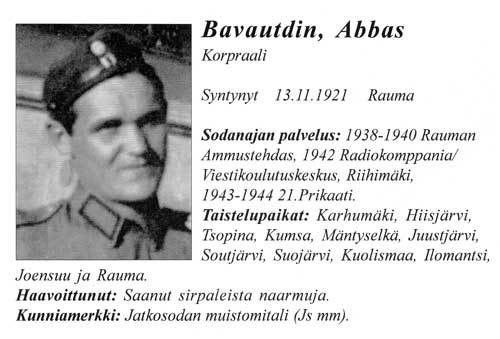
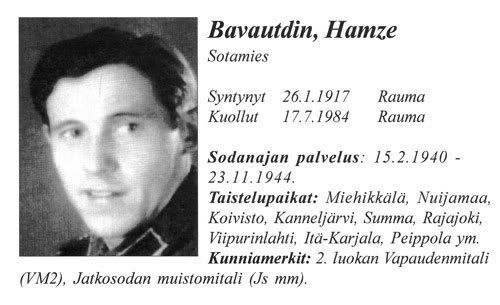
After telling the tragic stories of all these handsome Finnish Tatars, it would be strange not to include our closest relatives and war veterans, grandfather Abbas Bavautdin and his older brother Hamze.

Abbas was born in Rauma 1921. His brother was also born in this famous Finnish port, but neither of them were Finnish citizens during the war. Their parents Bedi and Fatihe, who arrived in Finland in the 1910's, were declared stateless when the Russian Empire ceased to exist, and they received Nansen passports. Still, the sons were called to serve by a special order from the provincial governor (maaherra). According to an anecdote told by my grandfather, one of his officers was surprised to learn that Abbas didn't have a Finnish passport, and declared him "our secret weapon".

Finnish Tatars in WW2, Part 4


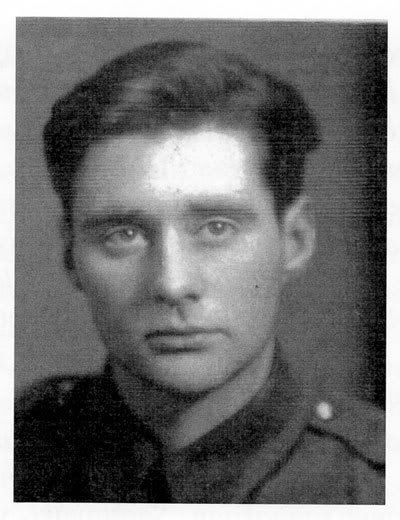
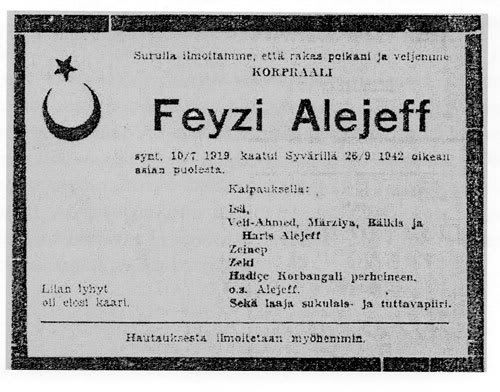
Feyzi Alejeff was born in the Mishär Tatar village Aktuk in 1919 and probably arrived in Finland as a small child. He served as corporal in the II/JR4 mortar platoon in Kuuttilahti at Syväri (Свирь, Svir) on the 26th September 1942. The Russians had observed the location of his mortar, and the company was ordered to move the mortar into a new position. Thus, the men had to move from the protection of a korsu dugout to tent lodgings. In the dark autumn evening, the men were making tea and ersatz coffee, while Feyzi was searching for some entertaining program on his private radio. Probably the light and sparks from the stovepipe revealed the position of the tent to the Russians, who fired a light machine gun round into it. A bullet hit Feyzi in the head; he died in the forest, unconscious, on the way to the field hospital.

His family published this obituary.

Monday, 6 August 2007

Tatar Soldier in the Finnish Army, WW2


On August 28, 1941, private Taufik Fathullah was mortally wounded at Kiestinki. He died at a field hospital three days later. He was 23 years old.

In the veteran book published by Suomen Islam-seurakunta, an article is devoted to his memory. Taufik had been born in Suksu at the Volga, one of the native villages which the Mishär Tatar immigrants left for Finland. Taufik was reputedly well liked among his friends, well-behaved, decisive and active in Tatar cultural activities. He had to break off his studies for the national student exam when the Winter War broke out in 1939.

Taufik served as a machine gunner at infantry regiment 53, which belonged to the Finnish III. Corps under Germany's Armeeoberkommando Norwegen during the Continuation War. The goal of their operation was to cut off the railroad to Murmansk. Taufik's fate was to be one of the many fallen during the fierce battles between regiment 53 and the Red Army at the village of Kiestinki in Viena Karelia. The Finnish forces were surrounded by the Russians in a motti, that is, the same tactic of encircling the enemy that the Finns themselves were famous for. 900 Finns were killed or lost.

Kiestinki is today Kestenga in the Republic of Karelia, Russian Federation.

A Tatar Soldier in the Finnish Army, WW2


On March 5, 1940, infantry corporal Hasan Abdrahim was wounded in his arm, shoulder and neck in battle against the Red Army at Säkkijärvi, Niemenlautta. He died later the same day. He had been presented a Freedom Medal (Vapaudenmitali) 2nd class and his family received a posthumous Freedom Cross (Vapaudenristi) 4th class.

Today, Säkkijärvi is Kondratyevo in Oblast Leningrad.

Finnish Tatars in WW2


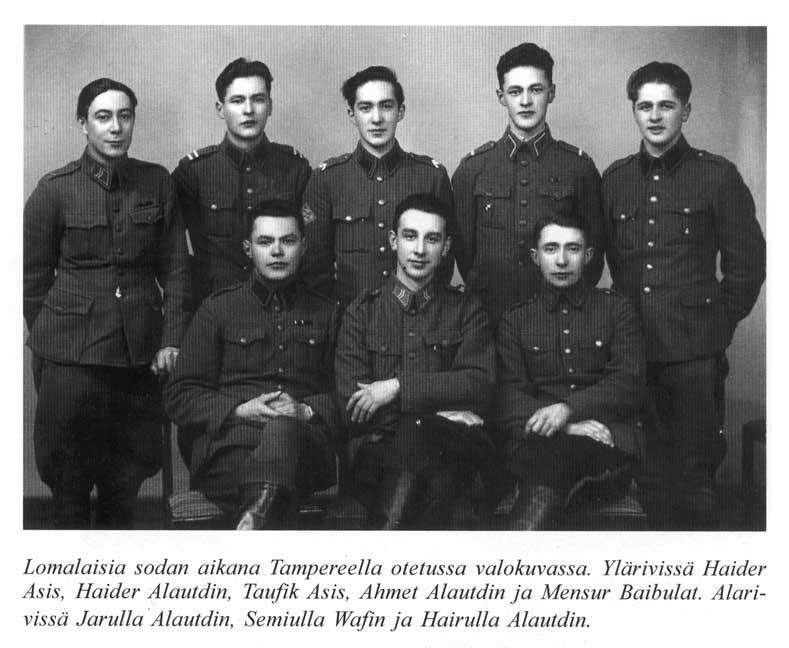
Photo taken in Tampere in the early 1940's.
From the book "Suomen Islam-seurakunnan veteraaniteos", Helsinki 2006