Showing posts with label ethnography. Show all posts

Sunday, 6 January 2013

Ville Haapasalo in Kazan

Ville Haapasalo is a popular actor in Russia. In Finland, he has recently become famous for his TV documentaries about the Silk Road and the states that became independent after the fall of the Soviet Union. Now Finnish television has started to show a new series about the Finno-Ugric minorities in the Russian Federation. Today, I am watching the first episode of "Suomensukuiset 30 päivässä" (The Finnic Relatives in 30 Days - more exactly, the series focuses on the Mari, the Erzya and Moksha, the Komi, the Udmurt, the Khanty and Mansi).

Haapasalo tries very hard to act like an ordinary ignorant guy, but the schedule of the series shows that somebody has been doing some proper research. As the starting point for his journey, he chooses Kazan, the capital of the Republic of Tatarstan, and devotes much time to the special cultural and religious mix of the thousand-year-old city. It is a necessary historical lesson for the Finnish audience who may not know about the role of Islam in Russian history, and the close contacts between the speakers of Finno-Ugric and Turko-Tatar languages. In fact, their fate has often been intertwined - their cultures have mixed with each other as much as with the Slavic-speakers; languages and religions have been switched back and forth. But this is a long story, and in this post, I will only show some entertaining screencaps, which do not reflect the full scope of the first episode.


Ville Haapasalo meets an imam in Kazan, who reminds us of the necessity to teach children not to discriminate people according to race, nationality or religion. This interesting conversation contrasts a conflict-torn Europe with a harmonious Tatarstan - I won't go into much more detail about the complicated reality behind those images, but there are certainly lessons to be learned from the Tatar balancing act.
Talking about the many nationalities living and working in Kazan: "Everyone can do something for their nation." Farid is Ville's guide in Kazan. He is an event organizer and a perfect diplomat, a Tatar in other words ;)

 
Boys cheering for the football club Rubin Kazan. 


Ville also visits a stable with the "fastest horses of the world". Many of them seem to be gifts to the former premier of Tatarstan, Mintimer Shaimiyev. The horses have their own solarium... 

The akhal-teke Nurik is a gift from Nursultan Nazarbayev, the president of Kazakhstan. He refuses to do tricks on command...


Random doggy (for Tinet). 

One problem with this programme is that we don't learn the names of a lot of important people whom Haapasalo interviews. Here are two hobby ethnographers who collect folklore among the Mari people and publish their results on their own website, for the interest of the general public, as Ville himself notes. So why not make it available for us?
One of the ethnographers looks a lot like Rudolf Nureyev in profile, only with dark hair. He also skipped the glass of vodka that came with the dinner. I wonder if he is Tatar? Of course, they both could be - many Tatars enjoy vodka, too...
This was only half of the programme, but if you live in Finland you can watch the whole thing here.

Sunday, 11 September 2011

Rest In Peace, Great Singer

Just a few days ago, we blogged about Aldyn-ool Sevek, the Tuvan master khoomeizhi ("throat singer"). Today, the New Research of Tuva published sad news: Aldyn-ool Sevek passed away after a long struggle against illness.
He was able to spend his last days in his native home at the Mongun-Taiga, the "sacred wilderness" of Tuvinian nomads.

A dated, but still unique and fascinating documentary about this region was produced in 1989, just at the end of the Soviet era.


Tuesday, 17 March 2009

The colour photographs of Sergei Mikhailovitch Prokudin-Gorskii

This topic was suggested to us by a reader. I had seen some of Prokudin-Gorskii's fascinating photographs before, but I hadn't realised to what extent he had made portraits of handsome Central Asian men ...

Sergei Mikhailovich Prokudin-Gorskii (1863-1944) was an innovator in colour photography. In the early 1900's, he formulated an ambitious plan to document the Russian Empire in full colour. He wanted to educate the empire's young citizens of its vast and diverse history, culture and modernization.
Tsar Nicholas II supported this project, and in 1909-1912, and again in 1915, Prokudin-Gorskii completed surveys of eleven regions, traveling in a specially equipped railroad car provided by the Ministry of Transportation.

According to Wikipedia, "his process used a camera that took a series of monochrome pictures in rapid sequence, each through a different colored filter. By projecting all three monochrome pictures using correctly-colored light, it was possible to reconstruct the original color scene. Any stray movement within the camera's field of view showed up in the prints as multiple "ghosted" images, since the red, green and blue images were taken of the subject at slightly different times.
He also successfully experimented with making color prints of the photographs, but the process was complicated and slow. It was only with the advent of digital image processing that multiple images could be satisfactorily combined into one."

The resulting images give a unique insight to an era we are used to seeing in monochrome only.

The Library of Congress has made a large amount of his photographs of landscapes, architectural monuments, industry, transportation and people available on their site. Here is a small, unsorted selection of his portraits from the vast Russian Empire ... Click to see them larger.


A fabric merchant in Samarkand. Note the framed Koran page above the stall.


Georgian tomato merchant near Sochi.


On the Registan, Samarkand.


A tea room in Samarkand.


A shashlyk restaurant in Samarkand.


A shepherd outside Samarkand.


At the Salyuktin mines on the outskirts of Samarkand.


A carpenter in Samarkand.


Fat tail sheep on the Golodnaya steppe.


Nazar Magomet, Golodnaya steppe. Note the doggie!


A Turkmen man posing with a camel loaded with sacks, probably of grain or cotton. Camel caravans remained the most common means of transporting goods in Central Asia well into the railroad era.


A young Bashkir.


A Bashkir switchman near the town of Ust' Katav on the Yuryuzan River between Ufa and Chelyabinsk in the Ural Mountain region of European Russia.


Packaging department, Borzhom (today's Borjomi, Georgia).


A man in a courtyard, place unknown.


A shashlyk restaurant, Samarkand.


Doctors in Samarkand.


Mullahs by a mosque, Azizia, Batumi.


A Sunni Muslim man of undetermined nationality in Dagestan.

Finally, here is a black and white photograph, which nonetheless has very interesting subjects ...


Barbers in the Registan, Samarkand.

Wednesday, 28 May 2008

Karachay guys: a bit of Dima Bilan and Alibek Bashkaev

As we saw in the Eurovision, Karachay people can be quite hot. To the left is a photo of Dima Bilan (via Cisoto), with the following caption: "I've tried many different things. I've even worked on construction sites. Of course, there it's not supercomfortable, but the main thing is - the experience of total extreme." Okay. Though I think he looks cuter with black hair and that beard thingie.

But Karachay people can (of course) be even hotter.


Alibek Bashkaev - judo
Originally uploaded by Alaugan


Judo is the perfect sport for short and stout guys. Alibek Bashkaev is such a guy. He's in the weight category 81 kg, was born November 16th 1989 and represents Russia in general and the Karachaevo-Cherkessk republic in particular as a sports master on international level (МСМК is the Russian abbreviation).

Alaugan has some more photos of him in his Flickr set "Karachay".

Here is his page on Judoinside.com.
And here is a list of Russian Judokas, some of them quite chirayliq. Alibek has a funny haircut in his photo there, though.

Finally, here is a video of Alibek during the 2007 Russian Judo National Championships Final. Kick ass!

Saturday, 22 September 2007

National Geographic


Once upon a time, I collected old National Geographics for my source library. For fun, I checked them for any Chirayliq material. Surely they - from 1963 to 1999 - would yield some treasures.
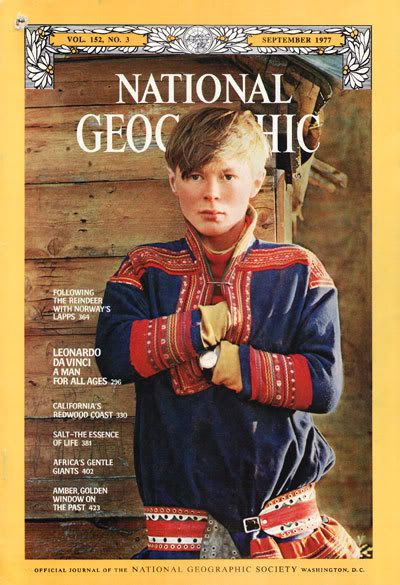
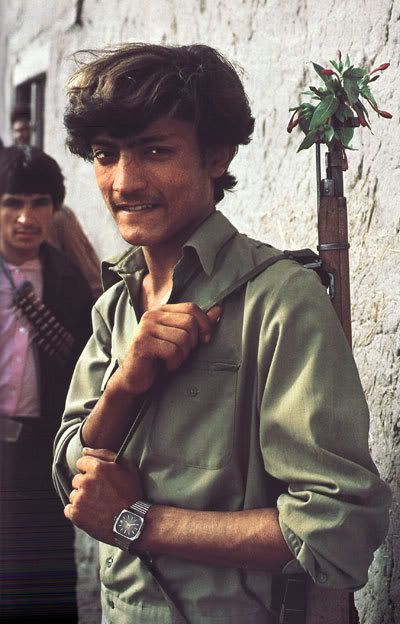
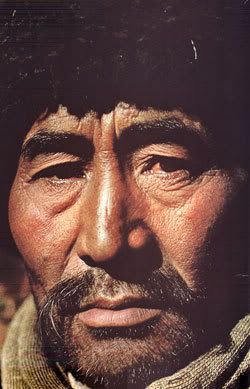
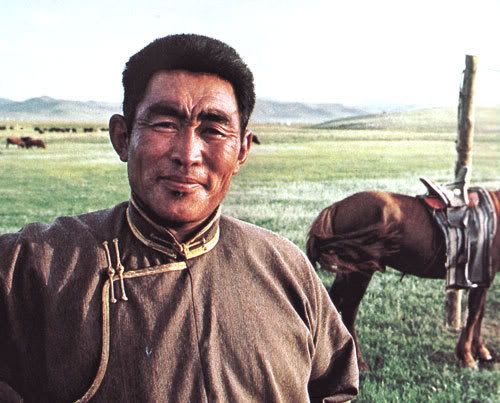
Of course, it wasn't so easy. Western ethnographers don't usually pay much attention to handsome men between 18 and 38, regardless what tribe or nation they might be photographing. The "normal" targets for National Geographic photoshoots are old, wizened grandpas, beautiful women, and children of both sexes. Thus, my chirayliq collection consists of two teenage boys, two men well into their middle age, and only a single one of our own age group.

The Sami boy at the top, Nils Johan Mienna (15 years old in 1977) represents the western edge of our dear Eurasian landmass. Reindeer herders inhabit the continent's rim all the way from Norway to East Siberia. I wonder if Nils wanted to continue his parents' traditions, or if he pursued other dreams. Typical of 1970's National Geographic, the article makes a big deal out of the demands of "modern" life and suggests that reindeer herding will be lost for the sake of efficiency.


From National Geographic's April issue, 1985, comes this portrait of an anonymous Afghani boy. He is described as a militiaman in a village near "Communist Kabul". The writer lets us know that the Marxist government conscripts 16-year-olds, and that the army is plagued by desertions. While Coca Cola continued to flow in the capital, the surrounding mujaheddin were dealing another kind of opium for the people. I wonder what happened to this young man.


Towards the heart of the continent: A Kyrgyz herdsman reminds a French couple of his ancestor, Genghis Khan, on their way through the Wakhan corridor in 1972. It is not made clear if he is identical to their guide, Abdul Wakil, a man of few words and fewer smiles, but with unerring survival experience. Of course, the travellers respect Abdul, their life depends on him, but they also suggest that he doesn't understand how a jeep could be more valuable than 14 of his beloved camels.


13 years later, another "descendant of the Khan" greets the National Geographic reporters with a Mona Lisa smile. Of course, the article is titled "Time Catches Up With Mongolia". There is nothing more reassuring for the Western reporters than the good old contrast between the backward but oh-so-authentic East, and the up-to-date but boringly normal West. Is modernization through sovietizised city slickers of Ulan Bator more wrong than Coca Cola in Kabul?


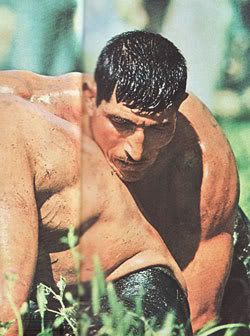
The final photo is from an article from 1968, "In the Footsteps of Alexander the Great". A Turkish oil wrestling contest takes place amid the ruins of Ephesus. Here, back in the Western end of Eurasia, Turks act out the roles of ancient Greeks and Macedonians in the imagination of the reporter.

Sunday, 9 September 2007

Lapland 1884


This anonymous young Saami man reminds me of the Finnish Tatars previously featured on Chirayliq.
In 1884 Prince Roland Bonaparte (1858-1924) organized an ethnographic expedition to Lapland. A portfolio was issued from the negatives taken during the trip by "the Prince's usual photographer". It is not clear from the source site which part of Lapland they went to, but I would guess at Norway from the available names of the other portrayed people.
The science of the time was interested in classifying people according to superficial "racial characteristics". The Saami were especially often targets for this sort of research, being something as rare as an indigenous European nomadic/seminomadic people of uncertain origin (as if anyone can be really certain of his/her origins). It has taken decades of struggle for the Saami to gain acceptance as something else than a research object or a specimen in a museum, and still, within the Saami communities, there are struggles going on between different ideas of what is "typically" Saami (reindeer herders against fishermen and farmers, city dwellers against country folk). (Some modern genetic research; see also the link to a paper on the Saamis' genetic link to the Volga-Ural region, not a common ancient ancestor as some might think, but a rather recent connection!)